

As we cross into July, the 2026 Washington Nationals are forcing a conversation nobody outside of 1500 South Capitol Street expected to have. Sitting hovering around the .500 mark and firmly entrenched in the National League Wild Card conversation, the "rebuild" label has officially been torn off.
But with the August 3rd trade deadline looming, new President of Baseball Operations Paul Toboni and GM Ani Kilambi face the ultimate high-wire act. Do you reward Blake Butera’s gritty clubhouse by buying reinforcements, or do you stick to the cold, analytical lab experiment and sell off expiring assets to maximize the long-term window?
If you’re trying to read the tea leaves on what this front office will do, here are the three distinct paths the Nats could take at the deadline.
1. The "Aggressive Rebuild" Safe Route: Trading the Expiring Assets
Let’s look at this through Toboni’s preferred lens: efficiency and asset management. The Nats have a couple of highly attractive pieces playing on one-year contracts who are performing far too well to let walk for nothing in the winter.
- Foster Griffin: What a story he has been since coming back from Japan. Sporting an elite ERA and showing frontline stuff, Griffin would be an absolute crown jewel for a World Series contender looking for left-handed starting depth. Aside from Tarik Skubal, he could be the most attractive rental option available right at the deadline this year.
- Zack Littell: After a horrific April, Littell has completely stabilized his value. His ability to move between the rotation and the bullpen makes him a prime target for a contender needing coverage. While he doesn't boast the high-end potential that Griffin does, he is a reliable starting pitcher who gets the job done.
Trading Griffin and Littell would trigger the cries from a fanbase hungry for a postseason run right now. But if Toboni values the prospect pipeline over a fluky Wild Card berth, cashing in on these one-year rentals is the most logical move on his spreadsheet.
2. The Shockwave: The Luis García Jr. Paradox
If you want a truly unique, roster-altering scenario, watch the infield. Luis García Jr. has had a magnificent bounce-back campaign, successfully transitioning to first base and flashing real left-handed pop. He has one more year of team control remaining before free agency, but does he fit the long-term vision?
With Andrés Chaparro up, Jorbit Vivas on the bench, and the front office constantly looking to maximize asset value, García Jr.’s trade value will never be higher than it is right now. Contenders are always desperate for controllable, young infield bats. If a team comes calling with an MLB-ready pitching prospect with years of control, do not be surprised if Toboni pulls the trigger on a shocker to build a sustainable "player development monster."
3. The "Hold the Line" Hybrid: Standing Pat and Promoting from Within
There is a third option that might actually be the smartest play: doing almost nothing.
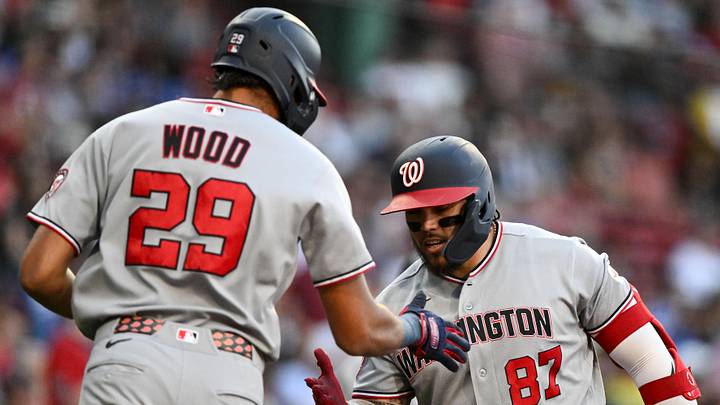
The Nats don't need to surrender valuable prospect capital for expensive rentals to chase a wild card. The best trade deadline acquisitions might already be wearing a Rochester Red Wings uniform, whether that's guys like Seaver King, Harry Ford, Yohandy Morales, or Abimelec Ortiz. We've already seen Dylan Crews come up and flash that elite gap-to-gap power alongside James Wood and CJ Abrams.
Instead of buying a mid-tier veteran bat or blocker, the Nats could choose to hold onto Griffin and Littell, see how far this historic run can take them, and let the internal youth movement dictate the success of the season. It rewards the locker room without compromising the future.
The Verdict
The one thing we can completely rule out? The Nationals doing a classic Mike Rizzo-style "all-in" push for a rental. Toboni didn't build this laboratory to compromise the 2027–2030 window for a one-game playoff appearance in 2026.
Whether they pivot to a soft sell of their expiring pitchers or trust the current roster to keep rolling right along, the deadline will be the definitive test of this new front office's identity.
 Add us as a preferred source on Google