

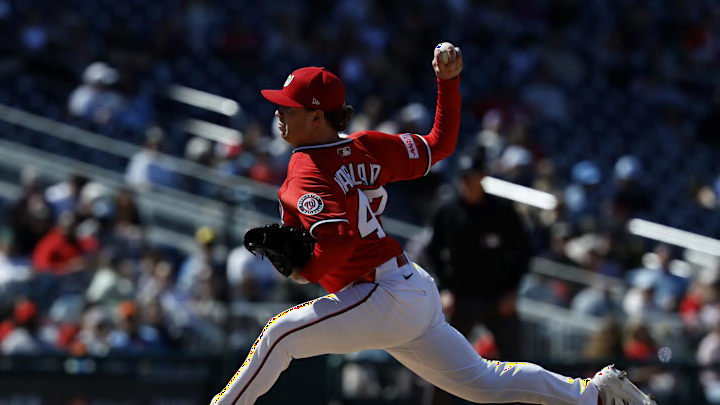
In January of this year, the Nationals claimed Gus Varland off waivers from the Arizona Diamondbacks. The right handed reliever has been solid pitching for the Nationals. He has a 3.07 ERA in 14 and two thirds innings pitched. He has also become the team’s closer and has recorded four saves.
Varland does not have an extensive big league career. He has bounced around from Milwaukee, to Los Angeles, to Chicago, to spending most of last season in AAA with the Charlotte Knights when he was not injured.. Throughout his big league career, he has a 4.40 career ERA. Varland, though, has an opportunity in a weak Nationals bullpen. So far, he has shown that he belongs in the big leagues.
Varland is not a complicated pitcher. For the most part, he throws two pitches. A fastball that averages 95.2 miles per hour and a slider that averages 87.5 miles per hour. Both of these pitches have velocity and movement profiles that are right around Major League averages. Varland also throws a changeup that he throws very rarely and only against left handed batters. With this rudimentary pitch mix, Varland has been successful.
Varland has chase rates, whiff percentages and strikeout percentages that are all above average. However, the right hander has not shown off any qualities that demonstrate he is truly elite. He needs to work on developing a deeper arsenal and refining his current arsenal so his pitch shapes are not averages. Against left handed batters, Varland does not have a significant offspeed weapon to get them out. He should add a curveball, splitter, or another platoon neutral pitch that is effective against opposite handed hitters. Also, if his pitches had shapes that were more unusual or unique, he would likely make the most out of his arsenal and be more effective.
Varland’s one great quality is his ability to limit walks. Usually, relievers have higher walk rates than starters, but not Varland. He has only walked 4.8 percent of the batters he has faced which is in the 95th percentile of Major League pitchers. The Nationals can trust that when they bring Varland into a game, he will not implode and lose his command.
Varland is a solid reliever, but he does not have the stuff that indicates he is truly elite. He could be an important part of the Nationals bullpen for a long time, or they could trade him to maximize his value while it is high like their closers of the past few seasons.
 Add us as a preferred source on Google