

As we reach the halfway point of the 2026 MLB season, the Nationals are in a position they're not incredibly familiar with. Entering play on Game 80 three games above .500, eight games out of the division lead and in a three-way tie for the final NL Wild Card spot, the Nats will need to decide how they'll approach the trade deadline.
In reality, they'll probably be taking a hybrid buy-sell approach. Move rental pieces (of which, admittedly, there aren't many) while trying to stack up near-Major League-ready or actively Major League talent for the next couple seasons. Of the greatest import is the pitching situation, especially the rotation. Luckily, there are a few trade suitors who could, hypothetically, help with that.
Boston Red Sox
The Nationals haven't shied away from linking up with Boston in the past, especially now that Paul Toboni is at the helm. One of the first swaps Toboni made with the team was acquiring Luis Perales from his old stomping grounds, and there could be room for another pitching pickup from the Red Sox.
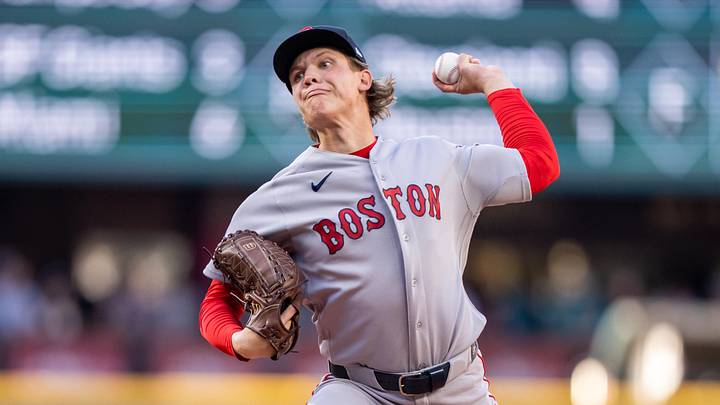
It might be tough, but a deal to acquire Connelly Early from the Sox could be in the cards. Boston's right on the verge of punting this year--after a disastrous start that led to Alex Cora and numerous other members of the staff getting dumped, they went 13-14 in May and are 6-12 to start June. Now 14 games underwater, the biggest issue is the offense. Boston are 27th in MLB in OPS, 29th in home runs hit, and dead last in runs scored.
Early, for his part, was a consensus top 60 prospect in the sport entering this season, and he mowed down hitters in four impressive starts at the end of 2025; but 2026 hasn't gone perhaps the way he or the team would have hoped. Through 15 starts, his numbers have slid, and he's down to a 22.5 K% and 4.86 FIP. Boston's also got an entire MLB-caliber rotation on the 60-day injured list, headlined by 2025 AL Cy Young Award runner-up Garrett Crochet, who's targeting a return to the mound after the All-Star break (though he's still not yet cleared to return to throwing). Theoretically, that should give them some room to trade from the rotation.
My thinking is that Boston will want to supplant third baseman Caleb Durbin. After a decent rookie showing with Milwaukee in 2025, the Sox picked him up in an offseason trade. He's floundered this year, to the tune of a .646 OPS, and his .277 OBP is preventing him from taking advantage of his stolen base prowess.
That has me questioning the possibility of a swap involving Brady House. I don't want to delude myself--just because the Nationals organization has sent signals indicating that House likely isn't a part of the long-term plan doesn't mean that other teams will suddenly be jumping at the opportunity to grab him. He's only running a 91 wRC+ with 4 home runs at Triple-A Rochester, anyway. But a look at House's minor league Statcast data indicates that he is, at the very least, capable of hitting the hell out of the baseball.
Adjustments still need to be made--he's got below-average strikeout and walk rates and isn't pulling the ball in the air enough to maximize his power potential. Those can be coached, though, and even if the defense doesn't get markedly better, if the offense improves, the Red Sox can handle it--they've got the third-best defense in the sport by both DRS and FRV.
This wouldn't be a one-for-one swap, but the foundations of a compelling deal are present, especially if the Red Sox ultimately decide to trade Jarren Duran, who's nearly 30 and having the worst season of his career by a significant margin. The Nationals have a considerable amount of outfield depth, and with Roman Anthony's recovery process proving difficult, the Sox are left without another truly impactful option in left field to join Ceddanne Rafaela and Wilyer Abreu. It's possible the team could be willing to go as high as Daylen Lile in trade talks. House is also ultimately expendable, especially with the emergent Curtis Mead taking over the lion's share of plate appearances in Washington at third base.
Seattle Mariners
Death, taxes, and the Mariners having simply too many good starters. Adam Jude at the Seattle Times reported Monday that with the Mariners having six SPs and not really being sure how to get the most out of them, they're moving to a piggyback approach. With the club fearing that a top-heavy bullpen has been overexposed in the early goings and trying to cling onto a narrow division lead, plus typically-electric closer Andrés Muñoz having the worst season of his career, Logan Gilbert told Seattle Sports on Tuesday that Emerson Hancock will slide from a starting role to "piggyback" with Gilbert during the former's next start on Saturday in order to give the bullpen a day off.
Long-term, it's not clear what the Mariners intend to do, and a quote from Jude's report attributed to Seattle director of pitching strategy Trent Blank indicated that the team itself isn't quite sure. Luis Castillo has slipped from a serviceable mid-rotation arm to a 5.22 ERA as he runs the highest walk rate he's had since joining the team in 2022, but he's still owed north of $20 million next year. La Piedra, as he's known, has been one of the main faces in the piggybacking efforts thus far (though those went on hold as Seattle pivoted to a wholesale six-man rotation for a stretch of 16 games in 17 days).
Still, the Mariners have two electric young arms on the horizon in Kade Anderson and Ryan Sloan in their first and second years in professional ball respectively. Logan Evans, though never a vaunted prospect and out for the season after January Tommy John surgery, provides a longer-term safety net as a bulk arm when he returns. The Mariners also have several minor league free agent arms stretched out at Triple-A Tacoma in the event they're needed.
Theoretically, it gives them some room to potentially deal the aforementioned Emerson Hancock. Hancock has had fantasy baseball communities abuzz as a potential breakout target following a six-inning scoreless outing in his first start of the year where he struck out nine and didn't allow a hit. He's had ups and downs since then, but his outing on the 2nd of May against Kansas City saw him throw 7 innings with 14 strikeouts.
There's clear potential in the arsenal of Hancock, though he's been shelled each of his last two outings against the Nationals and Orioles. He's limited walks, though, and his deceptively low sidearm delivery allows the movement profiles of his sweeper and cutter to play up. He's been up and down from the minors the last two years but would, in a trade, come over to Washington with four years of team control left and an option year to burn if need be.
So the fit is evident, but the question is what the Nationals have to offer Seattle. Perhaps Brad Lord could offer Seattle bullpen reinforcements. Pitching out of the pen this year as a multi-inning option, Lord features a similarly low right-handed arm slot, and his five-pitch arsenal has generated a 98th-percentile groundball rate.
Granted, the Mariners defense has been absolutely atrocious--they rank 29th of 30 in fielding run value, in large part due to underwhelming efforts from corner outfield platoon bat Luke Raley, bad shortstop play from J.P. Crawford (who has since moved off the position for top prospect Colt Emerson), and uncharacteristically brutal third base defense from offseason acquisition Brendan Donovan, who logged just 192 innings at the hot corner before hitting the shelf with a groin strain.
Still, it wouldn't be the first time the Mariners have traded for a grounder-heavy Nationals reliever lately. That Jose A. Ferrer swap has panned out excellently for Seattle thus far, and the Nationals have a notable slick-fielding infielder in Nasim Nuñez that could be included in a package for Hancock if the Mariners' defense needs shoring up.
After an electric homecoming in 2024 that saw Víctor Robles debut in Seattle with a 155 wRC+ in 77 games, he's had major issues remaining healthy since, and when he has played, he's been ineffective at best. Potentially Jacob Young could supplant Robles and Rob Refsnyder in a corner (or allow Julio Rodríguez a day off once in a while) with both defensive and offensive upgrades. Young has cooled off in June after a 101 wRC+ in May, but he's still having the best power season of his career, and his season numbers still outweigh those of Refsnyder's and the 2025-26 output of Robles.
So that's two options from teams in very different positions. The Nationals will, with almost complete certainty, not push all their chips in this year; this organization has preached time and again how important it is to build for the future and not jump the gun on mortgaging that future to chase a fleeting dream of playoff success right this minute. Nobody wants to become the Angels. But for a team whose top minor league arms are still a ways off, acquiring young controllable talent to join the rotation would be a massive boon not only just for a potential playoff push, but for the years to come.
 Add us as a preferred source on Google